Showing posts with label Poland. Show all posts

Friday, August 5, 2011

Memorial of Krystyna Holuj-Radzikowska Women's Tournament


The 1st Women International Chess Tournament – Memorial of Krystyna Holuj-Radzikowska

We organise this tournament to honour WGM Krystyna Holuj-Radzikowska (1931-2006), who was nine times Polish Champion (1951, 1952, 1953, 1955, 1956, 1957, 1959, 1966, and 1969) and to promote a development of young Polish women chess players.

Amongst titled players from Romania, Belarus, Slovakia, Belgium, Germany and Poland, there will be 3 Polish girls: Anna Iwanow, Monika Gluszko and Maria Leks. We hope this tournament will encourage more girls to play chess and give our young players possibility to test their skills with very difficult oponents.
The list of participants is:
1 Iweta Rajlich WGM 2436
2 Cristina-Adela Foisor WGM 2427
3 Marta Michna WGM 2397
4 Anna Zouzulia WGM 2381
5 Anna Sharevich WGM 2344
6 Karina Szczepkowska-Horowska WGM 2339
7 Julia Kochetkova WGM 2319
8 Joanna Worek WIM 2306
9 Mihaela-Veronica Foisor WFM 2217
10 Anna Iwanow WFM 2162
11 Monika Głuszko I++ 2103
12 Maria Leks WCM 2082
You can find more details about the tournament and a live transmission from all games here:
Info provided by Dorota Rzepecka
Polish Chess Federation
Tel. +48 22 841 41 92
+48 602 463 034
http://www.pzszach.org.pl

Memorial of Krystyna Holuj-Radzikowska Women's Tournament


The 1st Women International Chess Tournament – Memorial of Krystyna Holuj-Radzikowska

We organise this tournament to honour WGM Krystyna Holuj-Radzikowska (1931-2006), who was nine times Polish Champion (1951, 1952, 1953, 1955, 1956, 1957, 1959, 1966, and 1969) and to promote a development of young Polish women chess players.

Amongst titled players from Romania, Belarus, Slovakia, Belgium, Germany and Poland, there will be 3 Polish girls: Anna Iwanow, Monika Gluszko and Maria Leks. We hope this tournament will encourage more girls to play chess and give our young players possibility to test their skills with very difficult oponents.
The list of participants is:
1 Iweta Rajlich WGM 2436
2 Cristina-Adela Foisor WGM 2427
3 Marta Michna WGM 2397
4 Anna Zouzulia WGM 2381
5 Anna Sharevich WGM 2344
6 Karina Szczepkowska-Horowska WGM 2339
7 Julia Kochetkova WGM 2319
8 Joanna Worek WIM 2306
9 Mihaela-Veronica Foisor WFM 2217
10 Anna Iwanow WFM 2162
11 Monika Głuszko I++ 2103
12 Maria Leks WCM 2082
You can find more details about the tournament and a live transmission from all games here:
Info provided by Dorota Rzepecka
Polish Chess Federation
Tel. +48 22 841 41 92
+48 602 463 034
http://www.pzszach.org.pl

Tuesday, July 26, 2011

World's Thinnest House

Supposedly liveable at a yard-wide at its narrowest point. (Source)

Saturday, July 23, 2011

2 tie for 1st at Najdorf Memorial


Miguel Najdorf Memorial
Polish Grandmasters Tomasz Markowski and Dariusz Swiercz share the first place

The International Chess Festival dedicated to the memory of Miguel Najdorf was held from 14th to 22nd July in Warsaw, Poland. 98 players competed in the Tournament A, which is valid for FIDE title norms, 134 in the Tournament B, and 50 in Tournament C for players born on 2001 or younger.

After nine rounds of play, Polish Grandmasters Tomasz Markowski and Dariusz Swiercz shared the first place with 7 points each. Markowski takes the winner's trophy on superior tiebreak.

Final standings:

1-2. GM Markowski Tomasz POL 2611 and GM Świercz Dariusz POL 2553 - 7.0

3-8. GM Malakhatko Vadim BEL 2548, GM Czarnota Paweł POL 2541, GM Kempinski Robert POL 2600, GM Romanishin Oleg M UKR 2526, GM Babula Vlastimil CZE 2572 and GM Vysochin Spartak UKR 2552 - 6.5

9-17. GM Macieja Bartłomiej POL 2612, IM Warakomski Tomasz POL 2473, GM Olszewski Michał POL 2541, IM Dragun Kamil POL 2428, GM Brodsky Michail UKR 2563, IM Piorun Kacper POL 2514, GM Simonian Hrair ARM 2461, Nguyen Piotr POL 2378 and IM Łagowski Patryk POL 2321 - 6.0 etc

Miguel (Mieczysław) Najdorf was born in Warsaw on April, 15, 1910. He revealed his great chess talent as early as at the age of 10, when he achieved his maiden tournament successes. His first notable results at the Polish and international chess arena date back to the 30s. He was second (1931) and first (1934) in Warsaw Championships and then secong (1935) and third (1937) in Polish national Championships.

As one of Poland’s leading players, he represented his native country at Chess Olympiads three times, gaining team medals on all three occasions (bronze in 1935 and 1937, silver in 1939) and an individual gold medal in 1939. Additionally, he won an individual gold and team silver medal at the so-called unofficial Chess Olympiad in 1936.

The outbreak of World War II caught Najdorf in Buenos Aires, at the Chess Olympiad, most successful for him. Unable to return home, he decided to stay in Argentine and continue his chess career there. He won four more team medals (silver in 1950, 1952, 1954, bronze in 1962) and three individual medals (gold in 1950 and 1952, silver in 1962) at Chess Olympiads. He won Agrentinian Championships 8 times (1949, 1951, 1952, 1955, 1960, 1964, 1967, 1975).

In the 40s and 50ts Najdorf belonged to the close group of world’s best players, qualifying for the Candidates’ tournament of the World Championship on two occasions.

In 1950 he was one of the 27 top players awarded the newly introduced Grandmaster title by the International Chess Federation (FIDE).

Official website

2 tie for 1st at Najdorf Memorial


Miguel Najdorf Memorial
Polish Grandmasters Tomasz Markowski and Dariusz Swiercz share the first place

The International Chess Festival dedicated to the memory of Miguel Najdorf was held from 14th to 22nd July in Warsaw, Poland. 98 players competed in the Tournament A, which is valid for FIDE title norms, 134 in the Tournament B, and 50 in Tournament C for players born on 2001 or younger.

After nine rounds of play, Polish Grandmasters Tomasz Markowski and Dariusz Swiercz shared the first place with 7 points each. Markowski takes the winner's trophy on superior tiebreak.

Final standings:

1-2. GM Markowski Tomasz POL 2611 and GM Świercz Dariusz POL 2553 - 7.0

3-8. GM Malakhatko Vadim BEL 2548, GM Czarnota Paweł POL 2541, GM Kempinski Robert POL 2600, GM Romanishin Oleg M UKR 2526, GM Babula Vlastimil CZE 2572 and GM Vysochin Spartak UKR 2552 - 6.5

9-17. GM Macieja Bartłomiej POL 2612, IM Warakomski Tomasz POL 2473, GM Olszewski Michał POL 2541, IM Dragun Kamil POL 2428, GM Brodsky Michail UKR 2563, IM Piorun Kacper POL 2514, GM Simonian Hrair ARM 2461, Nguyen Piotr POL 2378 and IM Łagowski Patryk POL 2321 - 6.0 etc

Miguel (Mieczysław) Najdorf was born in Warsaw on April, 15, 1910. He revealed his great chess talent as early as at the age of 10, when he achieved his maiden tournament successes. His first notable results at the Polish and international chess arena date back to the 30s. He was second (1931) and first (1934) in Warsaw Championships and then secong (1935) and third (1937) in Polish national Championships.

As one of Poland’s leading players, he represented his native country at Chess Olympiads three times, gaining team medals on all three occasions (bronze in 1935 and 1937, silver in 1939) and an individual gold medal in 1939. Additionally, he won an individual gold and team silver medal at the so-called unofficial Chess Olympiad in 1936.

The outbreak of World War II caught Najdorf in Buenos Aires, at the Chess Olympiad, most successful for him. Unable to return home, he decided to stay in Argentine and continue his chess career there. He won four more team medals (silver in 1950, 1952, 1954, bronze in 1962) and three individual medals (gold in 1950 and 1952, silver in 1962) at Chess Olympiads. He won Agrentinian Championships 8 times (1949, 1951, 1952, 1955, 1960, 1964, 1967, 1975).

In the 40s and 50ts Najdorf belonged to the close group of world’s best players, qualifying for the Candidates’ tournament of the World Championship on two occasions.

In 1950 he was one of the 27 top players awarded the newly introduced Grandmaster title by the International Chess Federation (FIDE).

Official website

Monday, July 18, 2011

Nestorovic edges 11 Grandmasters to win Sveti Prokopije 2011 Rapid Chess Tournament


Sveti Prokopije 2011 Rapid Chess Tournament
IM Nikola Nestorovic edges 11 Grandmasters to take the first place

Sveti Prokopije 2011 rapid chess tournament took place on Saturday, 16th July in Lazarevac, Serbia. 58 players, with 11 Grandmasters and 10 International Masters in the field, competed in the 9-round Swiss tournament.

IM Nikola Nestorovic, coming "fresh" from the closed tournament in Krakow, Poland, is the sole winner half a point clear ahead the top seed GM Ivan Ivanisevic and veteran GM Slobodan Martinovic. Full standings bellow.

The tournament, organized by the Sah Klub Kolubara and FM Radenko Kokanovic, honours Prokopije - a patron saint of the miners in Lazarevac and Kolubara region. Chief Arbiter was IA Petar Katanic-Vujic.

Final top 15 standings:

1. IM Nestorovic Nikola SRB 2474 - 7.5
2. GM Ivanisevic Ivan SRB 2633 - 7
3. GM Martinovic Slobodan SRB 2436 - 7
4. GM Pikula Dejan SRB 2532 - 6.5
5. GM Todorovic Goran M SRB 2473 - 6.5
6. GM Tadic Branko SRB 2487 - 6.5
7. IM Arsovic Goran SRB 2402 - 6.5
8. GM Vukic Milan BIH 2411 - 6
9. GM Abramovic Bosko SRB 2464 - 6
10. IM Milenkovic Mladen SRB 2405 - 6
11. IM Govedarica Radovan SRB 2388 - 5.5
12. GM Lajthajm Borko SRB 2481 - 5.5
13. GM Cabrilo Goran SRB 2454 - 5.5
14. IM Radlovacki Jovan SRB 2416 - 5.5
15. IM Novoselski Zoran SRB 2384 - 5.5
16. CM Cvetanovic Uros SRB 2232 - 5.5

Sunday, April 3, 2011

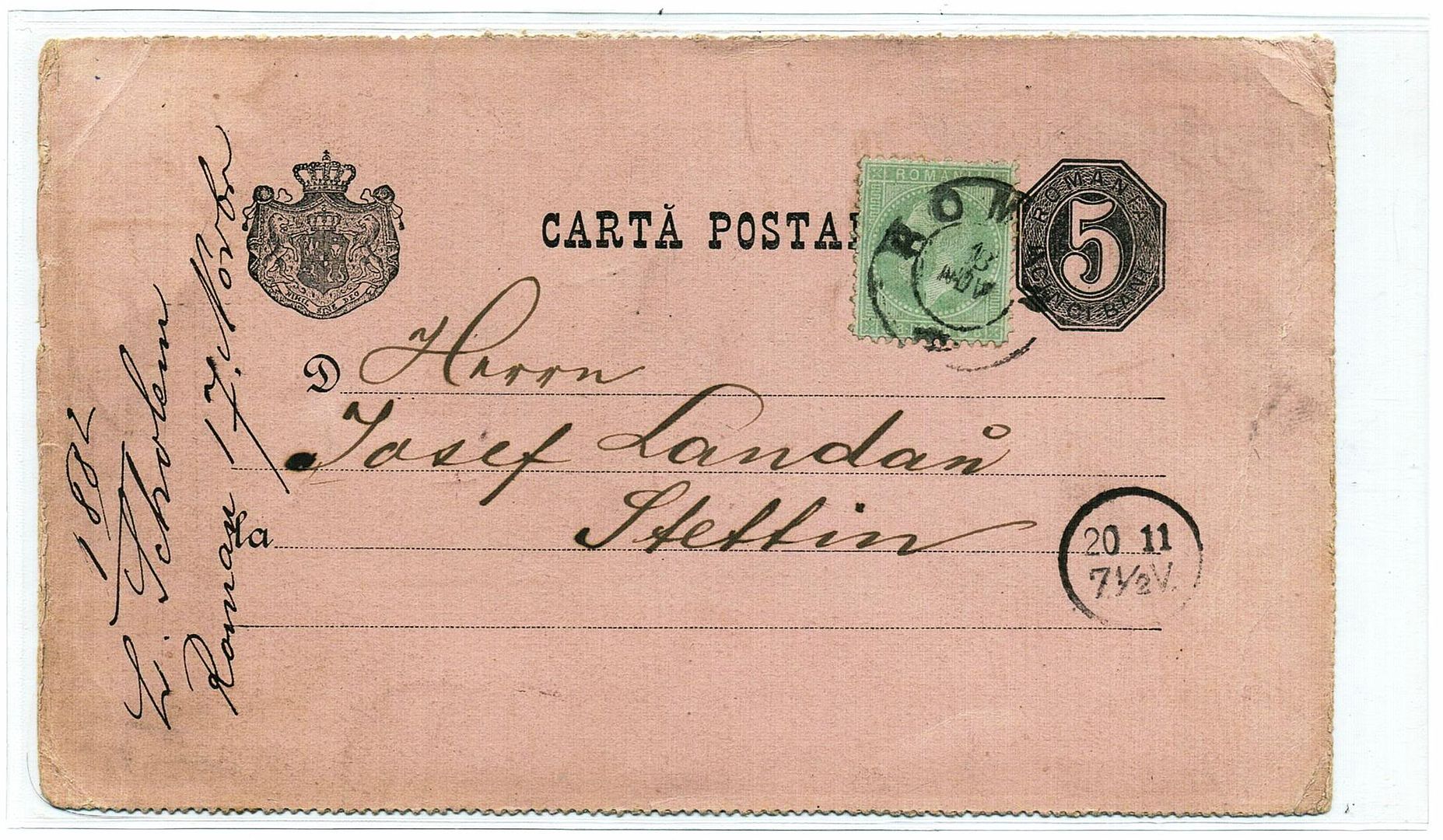
!!! 17 Nov 1882: postal card sent by Herr Scholem, from the city of Roman (Romania) to Herrn Josef Landau [?] in Stettin, Prussia/German Empire [present-day Szczecin, Poland]!!!


Ladies and gentlemen from around the world, this is the oldest postal/philatelic item that I own, so far!!!
Isn't that cool? :

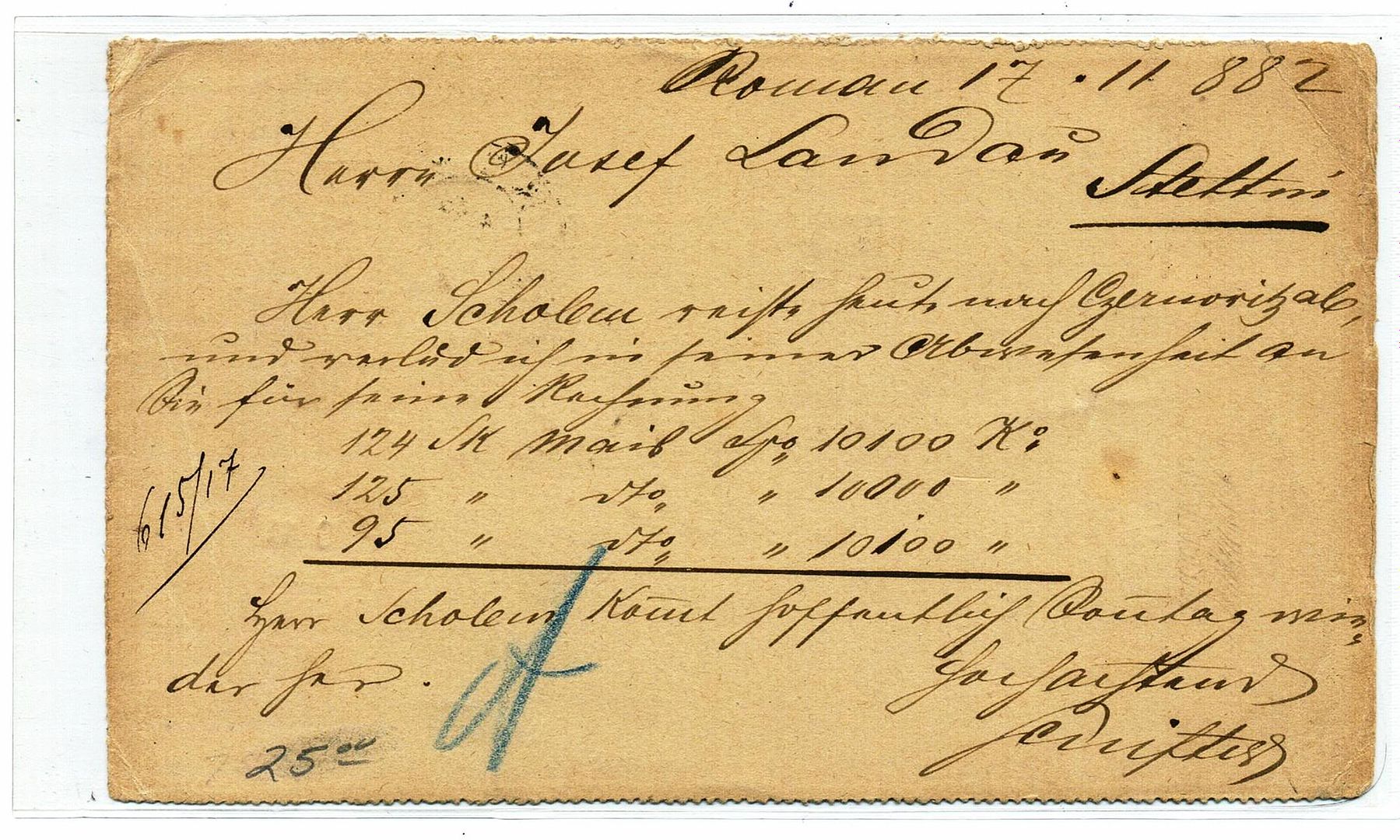
I hereby make an appeal to everybody who has an advance knowledge of philately (especially postal history), and German language to help me uncover the story of this very old postal card.
Thank you!

What can I decipher?
17 Nov 1882: postal card sent by Herr Scholem, from the city of Roman (Romania) to Herrn Josef Landau [?] in Stettin, Prussia/German Empire [present-day Szczecin, Poland]!!!

The monetary sums appear to be denominated in K; I think that's Kreuzer:

More deciphering brainstorming about this - is happening here:

"Roman (Romanian pronunciation: [ˈroman]; Hungarian: Románvásár, German:Romesmark) is a mid-sized city, having the title of municipality, located in the central part of Moldavia, a traditional region of Romania. It is located 46 km east of Piatra Neamţ, in the Neamţ County at the confluence of Siret and Moldova rivers.
It is thought that the name was taken from Moldavian Voivode Roman I of Moldavia, believed to be its founder.[weasel words] Roman's first son was Alexandru cel Bun."


"Stettin developed into a major Prussian port and became part of the Prussian-led German Empire in 1871. 
While most of the province retained an agrarian character, Stettin was industrialized and its population rose from 27,000 in 1813 to 210,000 in 1900 and 255,500 in 1925.[51] 
Major industries prospering in Stettin since 1840 were shipbuilding, chemical and food industries and machinery construction.[47]
Starting in 1843, Stettin became connected to the major German and Pomeranian cities by railways, and the water connection to the Bay of Pomerania was enhanced by the construction of the Kaiserfahrt (now Piast) canal.[47]"

Now, don't ask me about the text, coz Ich weiss nicht Deutsch so gut; nur ein wennig...:)

The coat of arms on this historic postcard belongs, of course, to the Kingdom of Romania. It has the royal motto:
"Nihil Sine Deo, Latin for "Nothing without God", is used as a motto by the German Hohenzollern-Sigmaringen royal family.

This formula was the motto of the Kingdom of Romania, while ruled by the Hohenzollern-Sigmaringen dynasty (1878 - 1947). The motto is proudly displayed in the arms room of Peleş Castle."


"Timeline (1859 - 1939)
1859Alexander John Cuza unites Moldavia and Wallachia under his personal rule.
1862Formal union of Moldavia and Wallachia to form principality of Romania.
1866Cuza forced to abdicate and a foreign dynasty is established. Carol I signed the first modern Constitution.
1877April 16. Treaty by which the Russian troops are allowed to pass through Romanian territory
April 24. Russia declares war to the Ottoman Empire and its troops enter Romania
May 9. Romanian independence declared by the Romanian parliament, start of Romanian War of Independence
May 10. Carol I ratifies independence declaration
1878Under Treaty of Berlin, Ottoman Empire recognizes Romanian independence. Romania ceded southern Bessarabia to Russia.
1881Carol I was proclaimed King of Romania on March 26. [MY NOTE: The postcard is dated in 1882, remember?]
1894Leaders of the Transylvanian Romanians who sent a Memorandum to the Austrian Emperor demanding national rights for the Romanians are found guilty of treason.
1907Violent peasant revolts crushed throughout Romania, thousands of persons killed.
1914Death of Carol I, succeeded by his nephew Ferdinand.
1916(August) Romania enters World War I on the Entente side.
(December) Romanian Treasure sent to Russia for safekeeping, but was seized by Soviets after the Romanian army refused to withdraw from Bessarabia.
[MY NOTE: cheese of the B type...]
1918Greater Romania is created.
By the Treaty of Versailles, Romania agreed to grant citizenship to the former citizens of Russian and Austro-Hungarian empires living in the new Romanian territories.
1919A military conflict occurs between Romania and Hungarian Soviet led by Béla Kun. The Romanian Army takes over Budapest on 4 August 1919. The city is ruled by a military administration until 16 November 1919.
1920The Treaty of Trianon upholds Romanian unification."


You thought "it's a long way to Tipperary"? [that's a cultural reference, don't worry about it]
It was a long, long way for the Romanian lands/principalities to achieve unification and independence from all those ancient and feudal enemies and invaders.

Them B cheese...
(Hint: read aloud, until you get it...)


===============
Happy Sunday Stamps meme!


Wednesday, February 9, 2011

What is that accordion song played like once an hour on canned music stations like HOT 99.5 FM (USA)? It's "Stereo Love", the longest charting song in the history of European top Hot 100, accumulating 52 weeks. Sung by Edward Maya ( Ilie Eduard Marian, Romania) and Vika Jigulina (Victoria Corneva, Russia/Romania)

The mastermind, Edward Maya: http://en.wikipedia.org/wiki/Edward_Maya
Featuring Vika Jigulina: http://en.wikipedia.org/wiki/Vika_Jigulina

The basic refrain of the song was inspired, and eventually settled from the copyright standpoint, from "Bayatılar"  "an Azerbaijani 1989 composition by Eldar Mansurov." http://en.wikipedia.org/wiki/Bayat%C4%B1lar

I like very much Edward Maya & Co, but "truth be told":
I would have emailed and snail-mailed a Registered Mail letter with Signature Confirmation to the Azerbaijan Composers Union about my unsuccessful attempts to contact Mr.Mansurov, the Azeri composer, about the copyright for the song. 
Even post it online, in a dated blog, or something.


If no answer, THEN and ONLY THEN I would have gone ahead with releasing "Stereo Love", in the idea that eventually the matter will be solved properly.
But at least I have written and dated proof that I have exhausted all the chances I could think of to contact Mr.Mansurov in due time.


Same thing for whoever the CIMPOI (Romanian bagpipes) virtuoso from Romania (Ion Laceanu? Dumitru Zamfira?) is the inspiration for "Desert Rain", which I also like very much.

Warning! Watch "Stereo Love" once, and it will become like an itch on your brain - you'll want to hear it again...and again...and again...:)
http://www.youtube.com/watch?v=p-Z3YrHJ1sU

While we are at it, why don't you "beat your American music station/channel to the punch" and watch/listen the new videoclip "Desert Rain" - get a haunting taste of the CIMPOI, The Romanian bagpipes!
http://www.youtube.com/watch?v=nY49R8nz01Q

You agree, right, that some songs are not just songs - they are a symbol of good times, when you were (maybe) in a dance club or something, and the whole crowd, including you, were dancing, clapping, feeling good and worry-free, at least for some precious few moments...

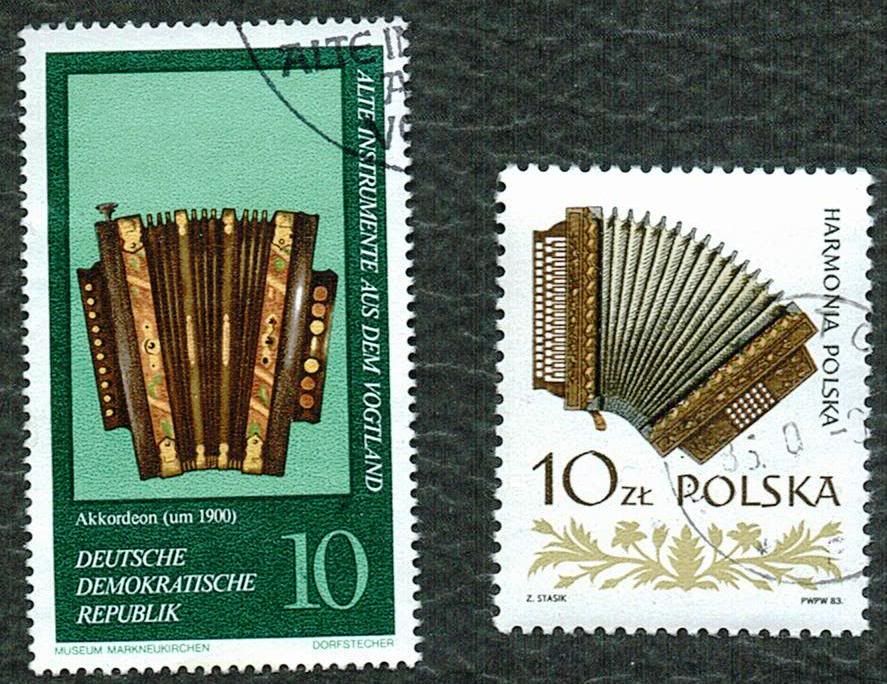
Placeholder: I have to dig up from somewhere in the house some stamps and postcard with ACCORDION, as if you can't just google or wikipedia yourself and see what's all the fuss...:)

This image shows just one of the many types of accordions, and not necessarily the one used for this song.
Read more about accordions here: http://en.wikipedia.org/wiki/Accordion

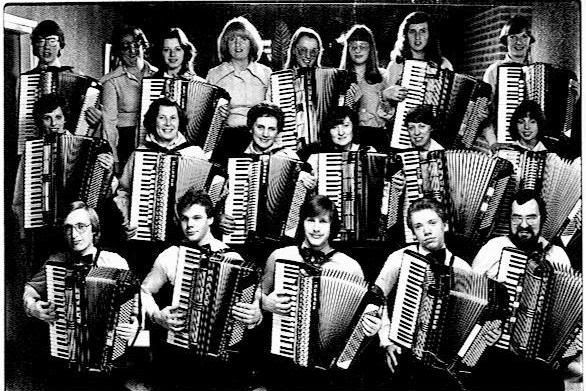
UPDATE 13 FEB 2011: my postcard showing a group of accordion enthusiasts from the Netherlands.

I have a superb, fabulous, magnificent collection of accordions on stamps - but it consists of...only these two stamps:


Sunday, December 19, 2010

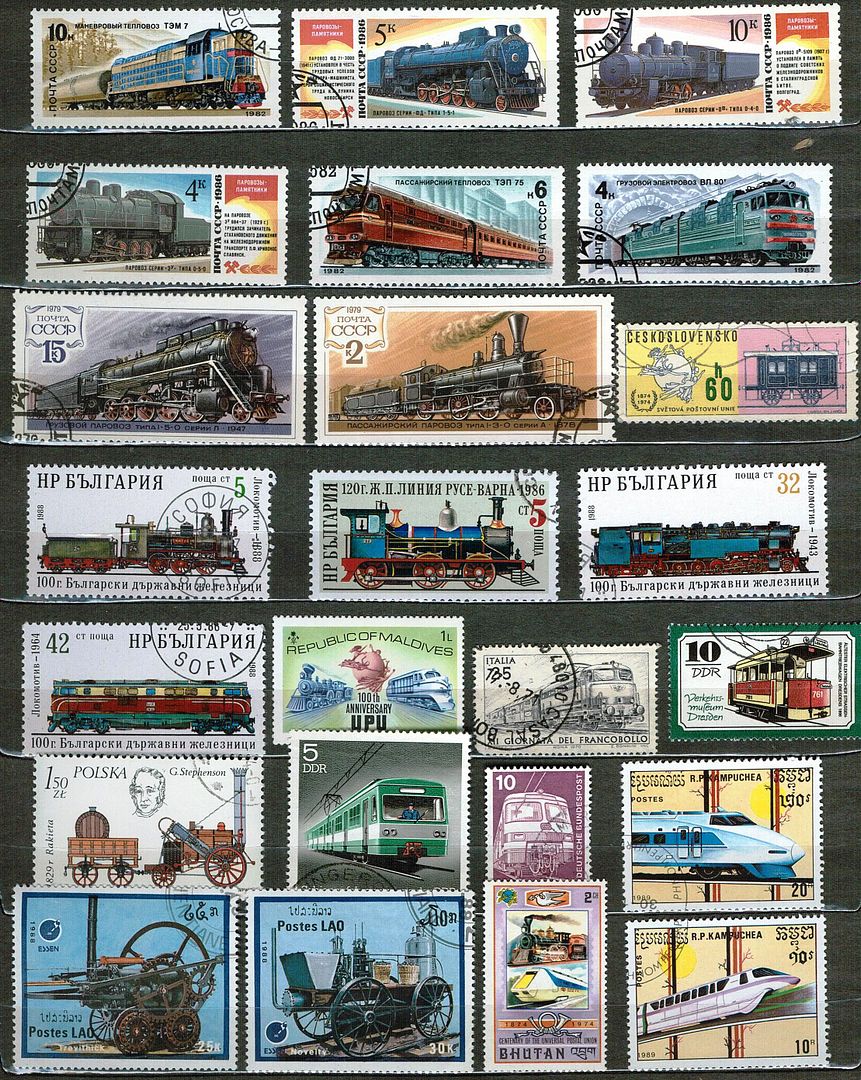
Trains on stamps, Part 4: Stamps from USSR, Czechoslovakia, Bulgaria, Maldives, Italy, German Democratic Republic, Federal Republic of Germany, Poland, Laos, Bhutan and Kampuchea/Cambodia.


Of all these countries represented on this stock book page, who shows the most modern trains?

Kampuchea, of course. 
Isn't Kampuchea the premier country for railway technology?
And Bhutan, a close second? 
:)

Can you spot the tramway, on this page?

Saturday, December 4, 2010

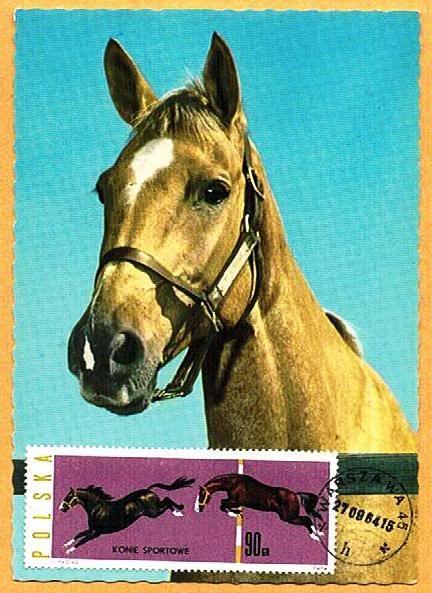
Geopolitical Journey, Part 7: Poland | STRATFOR - and a horse maximum card from Poland

Geopolitical Journey, Part 7: Poland | STRATFOR

I like very much not only WHAT George Friedman has to say, but HOW he says it.
"Le style c'est l'homme".
Meaningful and enjoyable reading! :)

========================================================
This is the only maximum card that I have, so far, from Poland. But there are so many more interesting Polish stamps, postmarks and postcards that could be used to create interesting  maxicards...:)
Is it the same breed of horse on the stamp and on the postcard? I don't know. Do you? Only an expert could say. Anyway, I like it as it is, even if there might be different breeds. What I wouldn't like, though, would be if the breeds are clearly VERY different - then it would look awkward. :)