Thursday, January 20, 2011

Read from BBC: "FBI charges 127 alleged mobsters in north-east US". Also, a personalized stamp with a mafia cultural reference (The Sopranos)

Read the whole article here:
http://www.bbc.co.uk/news/world-us-canada-12243086#

"Officials said alleged leaders of the all five major crime families in New York were arrested, including the entire leadership of the Colombo family not already in prison. In addition, the arrests hit the Gambino, Genovese, Lucchese, Bonanno, and DeCavalcante families."


Superior detective work, a la Lieutenant Columbo, culminated in a cavalcade of arrests. A novel wave of arrests of those who forced their Lucc at Gamb-ling with the law - 2011 will be a bon anno.


Is that gonna definitively eradicate THE MAFIA?

Mendel Beilis's daughter, שתחיה, is still alive?

Amazing. link

Part 1 - Side-by-side comparison between European bison (Bison bonasus) and American bison (Bison bison)

The front view, of the head only, is not too conclusive for the layman, for the average person. Don't they look pretty similar, at first glance?

Wednesday, January 19, 2011

Beards and beardlessness in Italian Jewish history - is Rabbi Reisman correct that "all great tzaddikim" had a full beard?

On pg. 416 of Rabbi Yisroel Reisman's Pathways of the Prophets1, in the section titled Imponderables, in the paragraph called 'A Clean-Shaven Shimshon?' we read the following:
I have no doubt that Shimshon, as all great tzaddikim, had a full beard.2
This is a surprising assertion.

This is not a merely academic, old debate. Only a year ago Vos iz Neias published an interview with a[n apparently] well regarded Israeli kabbalist named Rabbi Chaim Ezra Fatchia (link). He is not merely a kabbalist, but also a maggid shiur, and mashgiach in a yeshiva. He is clean shaven.

In the comments, the fact that he is beardless was immediately noted. Readers shot back that Ramchal was beardless, and there is/was an Italian kabbalistic tradition going back to R. Menachem Azariah of Fano to be beardless outside of Israel (this is a complex discussion; it became a major issue in the 19th and 20th century; in truth it seems that he wore a beard, but it was neatly trimmed).

As I said, this is a surprising assertion on Rabbi Reisman's part. Fully realizing that he didn't mean to say that really wonderful, kind, generous, pious, righteous individuals without full beards aren't tzadikim, I think he meant "great tzadikim" in the sense that it is commonly used - exceptional, famous saints and sages. Still, it does seem somewhat surprising that he doesn't seem to be aware that most Italian Jews did not wear a beard, and surely this included many tzadikim among them - not only Rabbi Moshe Chaim Luzzatto (where for him the issue seems to be that he was criticized for not growing his beard because he was - or claimed to be - a Kabbalist).

The beardlessness of the Italians was well known, and for the most part accepted. Still it should not surprise anyone that this wasn't always the case. There were many Italian merchants living abroad in various Mediterranean cities. They were known by the native Jews as Francos. As it happens, European travelers in the Middle East and Muslim countries tended to grow their beard because in those countries beardlessness was perceived as very shameful. Still, as Europeans they didn't necessarily want to wear full beards, so unless they were trying to blend in as natives they would wear a trimmed beard. Apparently this achieved the effect they were going for. On the one hand they didn't appear feminine and shameful, but they could still appear European. In all likelihood these Francos also wore trimmed beards, rather than closely trimmed to the skin with scissors, or removal by depilatory cream.

With this background in mind, on at least one occasion, apparently the native Jews of Salonica were scandalized by the closely trimmed beards of the Francos who lived among them. They demanded that they grow them or be expelled. The situation of the ex-pat Italians came to the attention of the Italian rabbis, including one of the foremost ones, Rabbi Samson Morpurgo -

Here is what he looked like:


- and he replied (שמש צדקה YD #61 pg. 102 [Venice 1743]). He calls the Francos אנשי איטליאה של יון, Italian Jews in Greece, who are being compelled by the חכמי שאלוניקי, the Salonican rabbis, to grow their beards. The question was, what happens if the rabbis carry out their threat? That is, these men will have been excommunicated, so would it be valid? He begins by saying that he will not personally address the specifics of this case, as he does not want to multiply machlokes, disharmony. However, he will address the general rabbinic audience and also the issue of rabbinic authority, and whether in this day and age any bet din has the right to compel stringencies and special pious behaviors. He discusses many laws which are no longer practices, yet the rabbis in their wisdom don't try to force people to obey, which would then result in their sinning out of rebellion. An example he gives is wearing tzitzis altogether, or to have them showing outside. He then points out that we have a reliable tradition that the term "destruction" in the verse about beard-removal refers to a single blade razor. Anyone who says otherwise is arguing on the truth and it is almost as if he is saying אין תורה מן השמים! He then deals with possible objections one may raise from the the language of the Tur, which the Beit Yosef clarifies. He also deals with a Terumas ha-Deshen (#295) which seems to say that there is a hint of sin with removing it with scissors, and therefore one should be strict. Morpurgo notes that we see from the Terumas ha-Deshen's own words at the end of the responsum what he meant to say; he writes that using scissors which are too sharp is problematic, since then there is a concern that only one blade is removing the beard, and that is prohibited. Thus he meant to say that removing it with especially sharp scissors is almost sinful, therefore it is a reasonable chumra, to be strict. He then discusses two other halachic sources, which while opposed to removing the beard, consider it a measure of piety, not law.

He gets into a lengthy discussion about piety and Kabbalah, and ultimately he hopes that the rabbis of Salonica will chill.

Not surprisingly this wasn't the only possible response to the situation, even from other Italian rabbis. Rabbi Joseph Ergas, who was one of those who had question Ramchal's lack of a beard, had reached a different conclusion - not because he was a fanatic, but because he is sympathetic to the rabbis there who desired that all residents of the city follow local custom - בין בקולות בין בחמורות - both stringencies and leniencies. Unfortunately I don't know for sure if he himself had a beard, although he must have, as a Kabbalist and, as I said, was critical of Luzzatto on this point. His responsum is quite interesting for its analysis of residency and local minhag.

Some other pictures of Italian rabbis. Below is Haham Raphael Meldola, who was rabbi of the Sephardic Jews of London. A native of Leghorn, he was ordained by the Chida (on him see here):


Here is the rabbi with the best name of any who ever lived - Rabbi Yishmael Kohen of Modena (1730-1811) who was also known by the name Laudadio Sacerdoti, which is a direct translation of "Yishmael Kohen" into Italian.


In fairness, I can't tell if he is clean-shaven or has a very closely trimmed, small beard. But he sure does have a wig on, and that is his kippah too. He was the author of excellent responsa called זרע אמת, which are cited numerous times by Rabbi Moshe Feinstein in Iggeros Moshe and many other posekim. In fact, a search of it turns up many hundreds of results besides for responsa of R. Ovadya Yosef. Although I can't say that the average yeshiva bochur looks at זרע אמת too often, I've seen that they are a normal part of the otzar (library) of many, many yeshivos. I imagine many people would be surprised if they saw what he looked like. I don't know if he was a "great tzaddik," but I'm sure he was pretty good, or at least better than average.

Interestingly enough, when Wessely wrote Divre Shalom ve-Emes, and rattled the Europe rabbinate in 1782 with his advocacy of educational reform3 he appealed to the Italian rabbis for support. Since he had mostly only been saying that Western European Jews should do what the Italian Jews had done for generations, he assumed they would support him, and he mostly assumed right. While they took pains to point out where they did not agree entirely with him, and some rabbis did so only grudgingly, they could not oppose things like a graded curriculum or secular education. Presumably they were proud of their traditional Jewish culture, and they indeed wrote words in support.

However, one of the Italian rabbis who did not support Wessely was Rabbi Laudadio Sacerdoti. His view is printed in responsum #107 in volume 2. He was concerned that Wessely's plan in effect turned the order of priorities upside down - Torah secondary, but humanistic education primary. However, he too agreed that a graded curriculum was only proper and that it is necessary to know languages. Lois Dubin pointed out that his own poetic compositions included references to mythological figures like Ulysses, which Shadal, who refers to his status as a posek by noting that he was "profondo ritualista," frankly found surprising.


Next we have the author-collaborator of a well-respected, often quoted sefer called Toldos Gedolei Yisrael by Rabbi Mordechai Marco Ghirondi, av beis din of Padua (1799-1852).


Obviously somewhat modern, yet in Rebbetzin Bruriah Hutner-David's haskalathon phd thesis, she grudgingly concludes that he was "squarely on the side of traditionalism," noting for example that in one letter he chides a correspondent for reading Karaite literature.

Interestingly, the tide in Italy appeared to have changed mid-19th century - probably on fashion grounds. Here is the young son of Shadal, Ohev Ger Luzzatto:


Of course I have to acknowledge an article which made a big impact on me - Elliot Horowitz's The Early Eighteenth Century Confronts the Beard: Kabbalah and Jewish Self-Fashioning (Jewish History 8.1-2 1994) which I read I don't know how many years ago, and in some ways was a revelation of an article for me - where some of these things are discussed in much greater detail.

And for the record, here is the much-discussed portrait of R. Menachem Azariah of Fano, who was also known as Immanuel - oddly enough, because this great Kabbalist's secular name was Manuel. Working backward, this gave him a Hebrew nickname. To the Chida this was something everyone knew - וידוע דהרמ"ע קרו ליה הרב עמנואל לפי שמנחם בלשון גוים קורין לו מנואל. Evidently it is for this reason that he sometimes signed his name מנחם עזריה עמנואל. A contemporary, Rabbi Shabbetai Sofer refers to him this way:


Which in plain Hebrew reads הגאון המקובל האלהי החסיד מהר"ר מנחם עזרי' הנקרא עמנואל. This is at the end of the third section of the general introduction to his siddur. Yes, the manuscript is online, although not very useful. Incidentally this little passage refers to a teshuva of the Maharam of Lublin, which his family censored from publication because he retracts a position in the face of Rabbi Shabbetai's arguments.


Also see this post about the rabbi depicted below's stringent stance against shaving on chol ha-moed:


1 In my opinion this book is, in certain ways, a ground-breaking and important book.

2 Interested readers will want to know that context of this line. Rabbi Reisman begins by noting that many older Bibles show woodcuts of Samson with long hair, but clean-shaven. This seems ridiculous, since he was a Nazir. (And, "all great tzaddikim" have full beards.) However, Rabbi Reisman highlights a Teshuvas Ha-rashba (1:407) in which the Rashba opines that the Nazirite prohibition of cutting hair only applies to the head, but not the beard. Regarding the beard, his prohibition is no more and no less than everyone else's.

3 Reading a headline in the Matzav.com blog yesterday made me smile: Agudath Israel of New Jersey Applauds Governor Christie for His Stance on Educational Reform. No, he is not opposed to educational reform. Apparently "educational reform" is okay sometimes.

Hebrew pronunciation in Samuel Romanelli's Masa Be-arav, a 1792 travel book about Morocco.

Since the other day I posted about Naftali Herz Imber, whom someone compared to vagabond poet Samuel Romanelli (1757-1814), I thought I'd post some interesting things he wrote.

Romanelli was an Italian Jewish poet who spent several years in Morocco, and wrote a famous book about it cleverly called משא בערב (Berlin, 1792). On page 9 he has some interesting linguistic information about the Hebrew pronunciation of the Moroccan Jews.


He approves of their pronunciation of Hebrew consonants. They distinguish between dagesh and rafeh and between the letters ח and כ as well as כּ and ק. However, only in the case of צ are they outdone by the Amsterdam Sephardim. They pronounce the ע as in the Arabic, and Romanelli claims they might even outdo the Arabs. In addition, they pronounce ג (without dagesh) like a g in Dutch (kind of like a rolled r to this here American ear; hear it pronounced here).

He gives them mixed marks for their vowel pronunciation. With the letters אהח"ע the sheva is sounded with no stress. Even the sheva na, they barely pronounce. They pronounce the meseg like a patach, which accords with the view of the Minchas Shai. They make the same mistake as the Ashkenazim - pronouncing milael and milera the same - only with them its the opposite. They pronounce the ו like the letter w in English (which is interesting - see below), and this is what enables them to distinguish between ב and ו. Regarding vowels, they differentiate only slightly between shurek and cholem and between tzere and chirik.

He then digresses to discuss the rather odd pronunciation of one Chacham of the Jews of Meknes, whom he heard preach in Arabic, only quoting pesukim in the original Hebrew. Romanelli writes that he heard him only barely pronounce the patach under the heh hayediah. Regarding other letters, at the beginning of a word he would pronounce patach like a chirik and vice versa. Greatly surprised at this unsual pronounciation, he asked for an explanation and none could give one. R. writes that the Chacham pronounced the ת like ch in Spanish or English, or ci in Italian, or cz in Polish. (At first I thought that Romanelli is showing off here. I doubt he knew Polish; maybe he was trying to create the impression that he knows all these languages. But the truth is that he was multilingual and had a gift for picking up languages, so he is probably multiplying examples for a multi-national Jewish audience that he knows can read Hebrew - they are reading his book after all - but may only know the pronunciation of one of these languages. If so, he is simply helping out potential readers.)

Anyway, after noting that this rabbi pronounced the ת like the ch in China, Romanelli advises the reader: Go ahead and try to pronounce the verse he was sermonizing on - טוב תתי אותה לך מתתי אותה לאיש אחר - boy does that sound bad! Finally, Romanelli notes that they shockel (sway) when they pray, like Polish Jews; some from from front to back, others from left to right.

Extra points of interest: In Romanelli's travels he wound up in England for a time and therefore he knew English. In 1799 Romanelli published a book called "Grammatica ragionata Italiana ed Ebraica: con tratto, ed esempj di poesia." In light of his noting the pronunciation of w in English, see this quote which appears as a motto on the page after the title:


I'm not sure if that W got cut off in the scan, or if it's a V, in which case that's quite an archaism! Incidentally, in this same book he mentions his firsthand knowledge of the strange Moroccan pronunciation of ת, and contrasts it with the English th:"Nell'interno dell'Impero di Marocco esprimono la ת come ci, o alquanto piu forte del th inglese."

Secondly, although I know that many erudite readers of my blog know these things, not everyone does so here's a good place to point something out. Readers will notice things like אמשטר"דם or אינגל"יש in the text. In today's Hebrew usage the " gershayim (quotes, inverted commas) are almost always used for one thing: to indicate an abbreviation. This fact seems to throw some people off and see abbreviations only in old texts, although this should not be so. In printed texts the lo'azim of Rashi also are written with gershayim. Since Hebrew does not have italics, the gershayim were employed instead, to indicate emphasis, foreign words and abbreviations. As this was 1792, Romanelli writes אמשטר"דם for Amsterdam instead of אמשטרדם. He didn't have to do this, but it was still within the ballpark of the usual.

Thirdly, language buffs will be interested in Romanelli's musings on the relationship between Hebrew and Arabic in his book. When he arrived in Morocco he did not know Arabic, but through careful listening and his knowledge of Hebrew and Aramaic he was able to learn it, although he says that it was the language spoken in the street and not literary (classical) Arabic. He makes the interesting observation that the local Jews considered Arabic to be nothing but a corrupted form of Hebrew (cf Rambam), but Romanelli considers them to be mistaken for holding it in such little esteem, for "Arabic contains the choicest bits of Hebrew," and he writes that he enjoyed figuring out the cognates in Hebrew (and Spanish, this being North Africa) for each word. Since the natives no doubt were highly aware of it, my guess is that he is impressed by the novelty of a cognate Semitic language's relationship with Hebrew, whereas they could care less. See the first image in this post, where he gives the Hebrew cognates for the names of the Muslim times of prayer.


He makes the interesting observation that all languages contain sounds which are not found in other languages, analogous to the Shibboleth/ Sibboleth incident in Judges. The Arab cannot say /p/, the Ashkenazic Jew doesn't pronounce ע, the European Christian pronounces neither ח nor ע. Gi and Ci in Italian, and J and Eu in French, the Spanish letter jota, the English th, German ch and the Portuguese ão are all stumbling blocks for those foreigners who want to learn the language in its correct pronunciation. Similarly, the vowels of Hebrew for the Western Jews, and even the consonants for European Jews.

The following passage concerns the two kinds of native Jews, those who speak Spanish and those who speak Arabic. It is interesting because he refers to "Rashi script" by name. He writes that the Spanish Jews write in "half with Rashi letters." I think he means that they write in both Spanish (Latin) letters and Rashi letters, whereas the Arab speakers write everything in the aforementioned Rashi letters. On the other hand it is possible that he is making a reference to the style of their alphabet, but if so then I'm not sure what he means to say, although I will note that often the semi-cursive alphabet of Jews in Arab lands, while resembling Rashi letters, also look quite similar to Arabic.


Speaking of "Rashi script," the other day I came across a really fascinating - and beautiful - book, a children's primer for Karaites which you probably aren't supposed to be able to download at hebrewbooks.org, but you can (Constantinople, 1831). As you can see, they call "Rashi script," אותיות מהירות הכתיבה ונהוגות בכתבי חול, "Cursive hand-writing letters which we use for secular writing." As an aside, we Rabbinic Jews are referred to as אחינו התלמודיים in the text, and it's full of rabbinic Hebrew phrases like תינוקות של בית רבן, and even quotes "היום קצר,"חז"ל - "the day is short," from Mishna Avos.


Back to Romanelli - it is very hard for travelers to desist from being critical of the manners and ways of the people they are visiting, even if they honestly try to see the good as well. So it is that Romanelli is critical of the kinds of Torah discussions they had, which he sees as similar to those of the Polish Jews (that is, bad) and some of their practices which he considers superstitious and ultimately derived from the Arabs. C.f. Jacob Saphir in Yemen. On one occasion, Saphir writes, he encountered a Yemenite Kabbalist who had written an amulet referring to Yeshua and Miriam. Not believing what he was seeing, he interviewed the Kabbalist until the latter admitted to him that he really didn't know what he was writing, but that he had copied the text from some kind of mystical Arab amulet (for another post about him discussing the pronunciation of Jews in a remote land, see here).

So it is that Romanelli is not impressed by their practice of child marriage, where 15 year old boys would marry 12 or even 10 year old girls. When he asked them why they do this, they responded that it is for the mitzvah of having children, and also to safeguard youths from their sexual passions. They mentioned a certain rabbi who married at 16 - but that if he had married at 14 it would have been like an arrows in Satan's eye! And they referred to the 'fact' that the word for youth, בחור, is a notarikon for ביום חסיד ובלילה רשע, 'by day he is a saint and by night he is evil.' Furthermore, they told him that the Messiah will not come until all souls are born. This 31 year old bachelor was not convinced. He claims that he even told them that they're being fools, and how can they not see that this doctrine was learned from the Arabs? He then laments that whoever tells them anything like that is seen as a heretic, a denier of the whole Torah!

See this earlier post where I speculated (albeit very casually and clearly with no justification at all) that a certain Italian Jew in the Middle East recommended that a European traveler read a Spanish Bible translation written by Jews native of Palestine. It's an interesting old post, and I doubt anyone saw it.

Tuesday, January 18, 2011

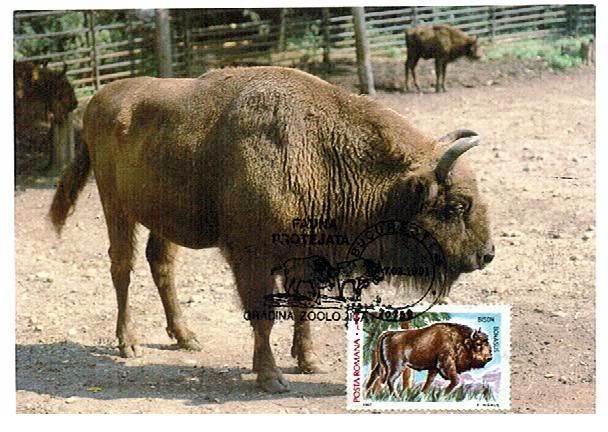
Captivity versus Freedom? How about Freedom made possible only thru Captivity? The fascinating true story of how the last 11+1 specimens [7 cows and (4+1) bulls] have saved the species called Wisent (pronounced /ˈviːzənt/) (Bison bonasus), also known as the European bison

I will detail this amazing story later, with more images and comments.


EXECUTIVE SUMMARY [  :) yes, I mean "long story - short" ]: this species was saved from the brink of extinction by the coordinated effort of breeding the last 12 specimens alive, all captive: 7 cows and 4 bulls of Lowland Wisent (Bison bonasus bonasus),  and 1 bull of Caucasian Wisent (Bison bonasus caucasicus) .

The eventual FREEDOM, semi-freedom or zoo captivity of the descendents was possible only thru CAPTIVITY, and selective breeding (yes, some in-breeding, too).

TBC (to be continued)

See, it might be a good idea to have a...Caucasian in your genealogic tree. :)

For comparison with the European bison: American bison (Bison bison).


===============================

Captivity – Freedom

January 18, 2011

Monday, January 17, 2011

Bald Jewish Women revisited - were London women expected to shave their head or skip shul in 1802?

Last February I posted on Bald Jewish Women. That post included a 1783 English poem referring to the shaved head and wig worn by a "beautiful Jewess" with a "hard fate" - the loss of her "long flowing ringlets."

In addition, I noted my provisional theory that the origin of the custom may have come about due to a hygienic issue in a time when the Plica Polonica was common, easy means of regular bathing and grooming less so, and covering the head at all times could not have been easy on the hair.

You may think it over and reject it or not. In any event, as far as I know the only Jewish women who maintain the custom of shaving their heads today are descendants of Hungarian-Romanian and Ukrainian-Polish Chassidim. However, it appears from the following source that at one time Yekke, German Ashkenazic, women did so as well.

Below are three sources from 1802 describing the same event. I include all three since two present it with a slightly different nuance and the third is simply the most readable - a clear reprint from the Times of London 10.28.1802. Also, the third one has an extra entry about whales, so that's cool.


As you can see, the "Dr. Hart, the Priest of the Dutch Jews" tried to enforce two religious norms under threat of excommunication. The first is to stop the eating of "wild fowl" and the second is that they are to make sure that their wives shave their head. Not only that, the women are barred from the synagogue until they comply.

"Dr. Hart" is of course Solomon Hirschel, the newly installed av beis din of London. The "Dutch Jews" are the Ashkenazim - in many 18th century English sources Germans are called "Dutch" which is an Anglicized rendering of Deutsch. Hence, the American Amish are also known to this day as the Pennsylvania Dutch, despite their German, not Hollandish, origin.

The Times blurb further editorializes that when he chastised his community for being "the least strict" in all of Europe, he was "complimenting" them. Traditional Jews would not have seen it or taken it as a compliment, but for Christians it was another matter.

As I wrote in another post, eventually R. Solomon would gain a reputation as being more tolerant of wrong-doing. Here we see that he came into office with a bang. I doubt he was trying to enforce head-shaving for long.

His father Rabbi Hirschel Lewin was av beis din of London for a few years in the 1750s and 60s. He was known then as Hart Lyon (hence his son being called "Dr. Hart" in 1802, whereas later it was always Hirschel, after his father's Yiddish name). If the London Jewish community was the "least strict" in Europe in 1802, it wasn't any stricter 40 years earlier. When Rabbi Hart Lyon tendered his resignation, he was asked by synagogue elders why he wanted to leave. He is alleged to have replied "Because that is the first she'eila (religious question) I have ever been asked here."

Getting back to the head-shaving, one wonders two things. First, did Rabbi Solomon Hirschel really mention head-shaving? It's hard to believe that he could have been so deluded as to think that this would fly in his new community. It seems to me that it's possible that he was talking about hair-covering in general, and the gentile press didn't realize that not all European Jewish women who covered their head shaved their hair underneath. So perhaps his chastisement about head/ hair-covering was garbled or misinterpreted. On the other hand, maybe he really was that myopic.

We can learn something about the religious strictness of London Jewry a full generation earlier in the complaints of Rabbi Solomon's father.
"Day by day we can see with our own eyes the decay of our people. We sin and act against the law of God ; all our endeavors are to associate with the Gentiles and to be like them. That is the chief source of all our failings. See, the women wear wigs (פאה נכרית) and the young ones go even further and wear décolleté dresses open two spans low in front and back (יוצאים ערומים מלפניהם ומלאחריהם טפחיים). Their whole aim is not to appear like daughters of Israel." (From a manuscript sermon translated by Charles Duschinsky.)
Note that he is critical of wearing a wig. In the 18th century this was not the hallmark of a pious Orthodox woman. Think Marie Antoinette, not Bnei Brak.

Please note also that this is not the sum and substance of Hart Lyon's critiques of the religious backsliding of his community, only what's relevant for this post. This isn't an instance of a rabbi singling out women for not being modest. It's part of a full panoply of criticisms of the religious behaviors he found lacking. Great were his intentions, I am sure, but it seems that it never occurred to him to try anything other than to chastise. It didn't work and he left after 7 years, with his son assuming his office four decades later. Little must have changed.